HYDRA: Protecting Hyderabad’s Assets

HYDRA: Protecting Hyderabad’s Assets

HYDRA: Protecting Hyderabad’s Assets Hyderabad is a bustling metropolis with a growing real estate market. With this growth comes the need for robust disaster response and asset protection systems. 
The government of Telangana proposes to transfer some of the powers of Greater Hyderabad Municipal Corporation (GHMC) to HYDRA. Powers of removal of unauthorised hoardings, flexes and collection of penalties and implementation of the Law.

HYDRA: Protecting Hyderabad’s Assets focuses on three main pillars:

  1. Disaster Preparedness and Response: HYDRA works to prepare the city for natural calamities, ensuring quick and effective response when disasters strike. This includes everything from setting up early warning systems to organizing rescue and relief operations.
  2. Assets Monitoring: The program continuously monitors public and private assets, such as buildings, infrastructure, and land, to identify vulnerabilities and potential risks. This proactive approach helps mitigate damage and loss, ensuring long-term safety and security.
  3. Protection: Beyond monitoring, HYDRA implements protective measures to shield assets from various risks, such as environmental hazards and human-made disasters. This includes reinforcing structures, implementing zoning regulations, and enforcing compliance with safety standards.

In a city like Hyderabad, where real estate is booming, it is crucial to have robust systems in place for disaster response and asset protection. HYDRA plays a vital role in protecting the city’s infrastructure and public assets, while my expertise ensures that individual investors can make secure property purchases.

Safeguarding Investments with Hyderabad Disaster Response and Assets Monitoring (HYDRA) and Expert Land Due Diligence

But protecting assets goes beyond emergency responses and safeguarding infrastructure. It also involves ensuring that investments in land and property are secure. This is where my expertise comes into play. As a professional specializing in due diligence for property purchases, I help clients avoid the costly mistake of buying problematic lands. Here’s how my approach complements the objectives of HYDRA.

Flower industry startup Sister-Entrepreneurs

Flower industry startup Sister-Entrepreneurs
Flower

Flower a need to Indian Society. Bengaluru-based startup Rose Bazaar attempts to modernise this tradition. It is also a tale of two young sister entrepreneurs creatively ramping up a family business in the bustling startup ecosystem of India

Industrial Consultant in Hyderabad for MSME’s

Flower, a daily need

It was clear that Yeshoda would work in the flower retail space. However, she realized the vast potential of the market when, one day, her mother was doing her daily puja with an elaborate set of flowers. While the global floriculture market valued at $370.4 billion may be driven by various reasons such as gifting and events, the duo believes that flowers serve a different “Indian need” in every household.

Yeshoda and Rhea Karuturi grew up in Bengaluru, went to high school in Ethiopia, and pursued further studies in the US. While Yeshoda pursued Business Administration and Master’s in Accounting from Washington University, Rhea studied Bachelor’s in Science, Technology and Society from Stanford University.

Flowers were a constant in their lives since 1994, when Yeshoda was born. Their father started a rose farm business that grew in India, Kenya, and Ethiopia. They observed the floriculture space and grew up hearing about harvest cycles, auction prices, and freight rates. This influence also charted a clear path for the sisters. They tell Her Story, “It was very clear to both of us from the beginning that we would return to India after college because the opportunity for disruption and innovation in emerging economies is what excited us.”

As she spent more time working in India, it became very obvious that Indians interact with flowers in a very different way, something that is very localized to our lifestyle,” the entrepreneur says, recalling the initial days of working on the family business in growing cut roses for export. Yeshoda further adds that strings of flowers like jasmine, marigold, and bud roses have marked their presence in the cabs or the puja rooms. The duo then dedicated a few months to validate their hypothesis, speaking to vendors, and testing different types of products. They saw that the market was highly fragmented and unorganised from both sides of supply and demand.

Power Tiller Designed to clear weeds by a Mechanic from Sircilla

Power Tiller
Power Tiller Designed by Ragi Kishan riding the power tiller, which can clear weeds.

Power Tiller for Farm mechanization is the mantra for increased productivity in the agriculture sector. But, there is one area of agriculture activity that is still dependent on manual labor. And, the ploughing, particularly in cotton fields — weeding.

Industrial Consultant in Hyderabad for MSME’s

And, with the sector facing acute shortage of labour with the launch of National Rural Employment Guarantee Scheme. As a result, it has become a challenge of sorts for cotton farmers to deal with this part of the activity. Which, has to be done at least four times before the crops are harvested. Needless to say, it also causes a hefty dent in the farmers pockets that adds up to the production costs.

Power Tiller an automation to clear weeds

However, a solution to this may soon be available if the innovative ingenuity of a 55-year-old mechanic from Rajanna-Sircilla district who has designed a power tiller for the task works out well. It certainly has caught the attention of IT

Ragi Kishan, a native of Boppapur, a tiny village in Yellareddypet mandal, has put together a power tiller that may well solve the problem of manual weeding. Kishan is a popular motor mechanic in Yellareddypet and surrounding areas, and he has been running a workshop at Gollapalli for the past 35 years. He is considered an expert in motorcycles, jeeps, vans, school buses, millers, JCBs, harvesters and other vehicles.

Kishan, moved by the plight of farmers, decided to help them and within a month, designed a power tiller at a cost of Rs 45,000.

This Machine is two feet wide and six feet long. Result is, it can move easily between cotton plants because of the distance between rows. It removes weed with the help of three ploughing and a blade fixed to it. However, it is possible to remove weeds in one acre within two hours and it requires just three litres of diesel. In Addition, the tiller has dual facility of KG wheels and Tyre, it can also move on roads like any other vehicle.

How to Strengthen Your Business After Corona Virus Lock Down

Business After Coronavirus Lock Down

Business After Coronavirus Lock Down, you should Strengthen your Business. Because, the COVID-19 outbreak has affected not only marketers but also customers and suppliers. The situation has created economic uncertainties that have transformed people’s routines.

Industrial Consultant in Hyderabad for MSME’s

Digitize Your Business

Many business owners are at a dilemma at the moment. With the volatility of the current economy, many companies have closed, and others are recording massive losses. And while some losses are unavoidable, as an entrepreneur, you should try to minimize these losses by utilizing the available opportunities. What does this mean? It means that if you’ve been running a land-based store, in-person events, or trades hows, it’s time to re-examine your marketing strategy. As extreme measures such as isolation and lock down take effect, the internet is the best place to connect with your clients and customers. This is how you can turn the current situation into an opportunity to improve your digital communication. Remember that regardless of the situation; people are always looking for answers and updates to better their lives. So if your brand can address their needs during this period, then you’re on the right track.

Business After Coronavirus Lock Down – Identify and Optimize New Sales Channels

While people are observing social distance as one of the ways to minimize the spread of COVID-19 pandemic, investing in a variety of sales channels can be a good idea. Many ways you can achieve this include enabling e-commerce functionality on your website to make it easy for your customers to order goods or services. You should consider signing up on one of the best e-commerce platforms developed for businesses of all levels. Once you build an e-commerce platform, ensure you provide affordable goods or services along with quick delivery to your customers’ homes. Above all, don’t forget to offer interaction tools on your website to help address your customers’ issues.

Build, grow, and maintain Good Customer Relationships

Perhaps you’re investing so much in acquiring new customers. But have you put enough effort to retain the already existing customers and how often do you keep in touch with them? If you’ve been in business for long, you know that it takes double the efforts and resources of retaining an old customer to acquire a new one. Consequently, building good relationships with your existing customers can help improve your customer experience. When customers feel happy about your brand, they become loyal, thus increasing your customer base. Furthermore, keeping in touch with your customers can make them feel valuable; therefore, they can easily become brand ambassadors. Also, loyal customers can help market your brand through word of mouth to friends and family, thus bringing in referrals which will, in turn, grow your business.

Glass Kitchen Chimney Paper Egg Holder (Pack of 20) Amazon Basics Double Decker Plastic Egg Boiler

Ghee Story

Ghee Story
Ghee Story
Industrial Consultant in Hyderabad – MSME Consultant

Ghee Story…

A young chap came home a short while ago. He asked me, “Sister, Do you have Ghee?”
Mostly I say no to the one asking for ghee. Because, if I say yes, then they will question me about the high price.
Therefore, I replied to him, “It may be available with someone I know. I shall check and let you know”
He said, “I need it immediately”. He continued, “It’s for making roti’s to a VIP, He wants either butter or ghee”.

I said, “It’s Rs.1000 per half a kilo”
He mentioned, “I heard it’s only Rs.300 per kilo”
I explained patiently, one sack of cow feed for Rs.900, wages for the cowherd and for milking. In addition, it would take nearly 15 to 20 days to prepare the butter little by little from the milk. On the day of boiling the butter and preparing the ghee, the entire house would be a mess and we start thinking when do we complete and clean the house.
“How much would it be the cost for all these works, brother?” I asked him.
He replied, “Let me esquire and get back”

“Brother, Sometimes due to the work burden I even think, why should we continue this dairy business. As he is a VIP, he could have gone in his vehicle to the super market, which is very close by and get the butter quickly”
He replied, “It wouldn’t be original”
“All the time we are selling our good produce for a loss like this and ended up selling out even our farming land. Hereafter at least we consume these good produces instead of selling, that is the reason I said no”, I said.

He looked understanding the fact and said, “It looks reasonable”.
Here onwards, even If people ready to pay more, it is doubtful that we are able to get genuine products.
Even If he is not able to take back the investment or pay interest for the loan, the farmer who says no to the VIP is the real VVIP in this ghee story
Farmer – A real VIP

Realme

May Day – What happened on May 1?

May Day
May Day
May Day

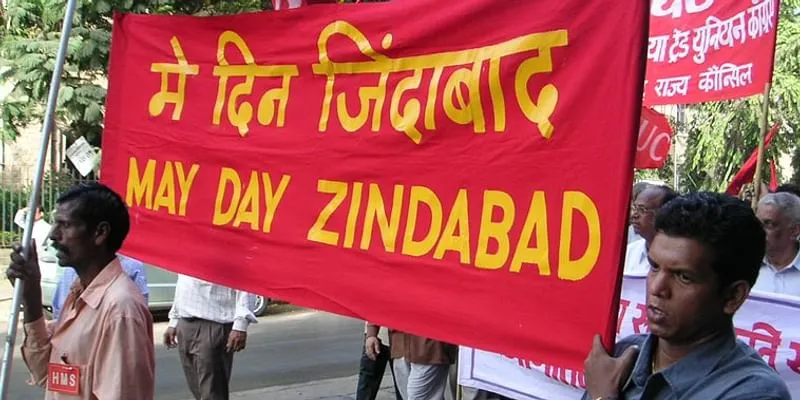
May Day – On May 1, 1886, in Chicago, Illinois, labour activists, who had been working jobs that paid less, involved zero perks, guaranteed no healthcare, and demanded long working hours, decided it was finally time to set their foot down and demand better working conditions.

Industrial Consultant in Hyderabad

Workers, at that point, had been clocking 16-hour shifts in factories, and working in highly unsafe conditions. They gathered at Chicago’s Haymarket Square, demanding eight-hour workdays, all the while maintaining peace and refusing to take up arms. However, the protest quickly turned violent after police fired at the workers, causing nearly 15 deaths.

Three years later, the International Socialist Conference officially recognised May 1 as International Workers Day, in honour of the Haymarket Square massacre. Other countries, soon after, adopted the holiday to celebrate and thank their labour forces.

When did this struggle really begin?

We know now that May 1 was coined as a global day of labour recognition only in 1889, after the Haymarket protests. But it’s necessary to take cognisance of the fact that labour struggles are a concept much older than that.

In the 1840s, a huge political and social change happened in Europe in the form of the anti-feudal revolution. It resulted in the formation of the International Workingmen’s Association – an umbrella union for all socialist and communist organisations – in London.

Thirteen years later, in 1889, a second, stronger organisation was formed in Paris to tend to the interests of labour unions. It was called the ‘International Socialist Conference’; it was the same body that declared May 1 as ‘International Workers Day’.

India’s first May Day

When Malayapuram Singaravelar – the leader of the Labour Kisan Party of Hindustan – founded his own party on May 1, 1923, he introduced the country to the concept of ‘International Labour Day’.

How Businessmen Think As Compared To Job seeker

Businessmen Job seeker
Businessmen and Job seeker difference…

Businessmen Job seeker story, Most of you will agree that mindset is the key to succeed in today’s world. It is the thing that differentiates businessmen from those who look for jobs. With all respect to people doing jobs, business requires a long-term mindset most of the times, whereas a lot of people get into jobs to make money instantly.

Industrial Consultant from Hyderabad

Am going to tell a story of a Samosa seller and a manager of some company met and discussed the same topic. In Hyderabad, there is a Samosa vendor. His shop is in front of an MNC. His Samosa are tasty. Many of the employees prefer lunch at that place.

One day, a Manager came to the guy selling samosas. While he was eating samosa he asked the shopkeeper- “You have maintained your shop nicely and have good management skills. Don’t you think that you are wasting your talent and time by selling just Samosas? Think, if you were working like me in any big company, you would have been a manager like me, isn’t it?”

Poor samosa guy, he smiled at the manager and said: “Sir, I thought my work is better than your work. Do u know why? 10 years back I used to sell samosa in tokari (Leaf basket). At same time you got this job. That time I was earning Rs. 1,000 a month and your salary was 10K. In this 10 years of journey, we did progress a lot. I now own this shop and two other and became a known ‘samosa-wala’ in this area and you became a manager. Now you are earning Rs.1 lakh per month and so m I. So surely, I can say that my work is better than yours. It’s because of my kids future.

Let me explain –Please pay attention. I started my career from zero but my son won’t have to suffer the same. One day my son will take over my business. He won’t have to start from 0. He will get fully established business, but in your case, the benefits will be taken by your owner’s kids, not by your kid. You cannot offer your same post to your son or daughter. They have to start from ZERO again. Whatever you have suffered 10 years ago, your kids have to suffer the same.

My son will extend my business from now and when your kid will be manager my son will be far away. Now tell me who is wasting the Talent and Time.

Client Business Consultancy

Aarogya Setu app in India’s fight against the Corona Virus

Aarogya Setu app
Aarogya Setu app
Aarogya Setu app click here to download

Aarogya Setu app released by The Ministry of Electronics and Information Technology that helps people understand their risk of exposure to the Corona virus disease and take necessary precautions. Here is what you need to know about the app and how it works

Explained by Industrial Consultant in Hyderabad

Governments across the world are looking at ways to flatten the curve of the Coronavirus pandemic. In India, one such step is the Aarogya Setu mobile app, developed by the Ministry of Electronics and Information Technology, which helps you understand your risk of contracting COVID-19.

Why should I use the Aarogya Setu app?

This is designed to help you self-examine and understand your risk of contracting COVID-19. All it requires is that you keep your Bluetooth switched on and based on your location, the app will alert you, if you have unknowingly crossed paths with a COVID-positive person. In this case, if you happen to develop symptoms, you could take necessary precautions early on.

How do I start using this?

Once you download the app on your smartphone, you will need to allow the app to access your device location. You will also be asked to enter the OTP for confirmation. Fill in the required information, such as gender, name, age, profession, history of foreign travel, etc. If you have travelled recently and there have been COVID-19 cases reported thereafter, the Indian Council of Medical Research (ICMR) database will help you understand if you are at risk.

Will this help locating potential threats?

The app calculates your risk, by using artificial intelligence, algorithms and Bluetooth. For this, the Bluetooth needs to be turned on all the time.

Is the Aarogya Setu app available in regional languages?

Yes, apart from English and Hindi, Aarogya Setu is also available in Gujarati, Tamil, Kannada, Telugu, Bengali, Oriya, Malayalam, Punjabi and Marathi.