
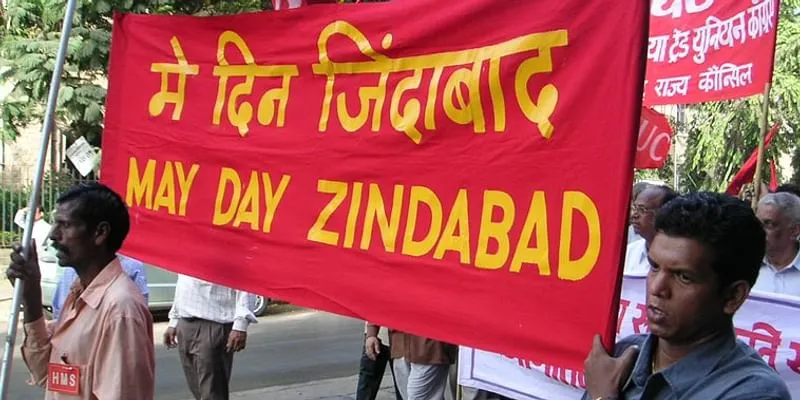
May Day – On May 1, 1886, in Chicago, Illinois, labour activists, who had been working jobs that paid less, involved zero perks, guaranteed no healthcare, and demanded long working hours, decided it was finally time to set their foot down and demand better working conditions.
Industrial Consultant in Hyderabad
Workers, at that point, had been clocking 16-hour shifts in factories, and working in highly unsafe conditions. They gathered at Chicago’s Haymarket Square, demanding eight-hour workdays, all the while maintaining peace and refusing to take up arms. However, the protest quickly turned violent after police fired at the workers, causing nearly 15 deaths.
Three years later, the International Socialist Conference officially recognised May 1 as International Workers Day, in honour of the Haymarket Square massacre. Other countries, soon after, adopted the holiday to celebrate and thank their labour forces.
When did this struggle really begin?
We know now that May 1 was coined as a global day of labour recognition only in 1889, after the Haymarket protests. But it’s necessary to take cognisance of the fact that labour struggles are a concept much older than that.
In the 1840s, a huge political and social change happened in Europe in the form of the anti-feudal revolution. It resulted in the formation of the International Workingmen’s Association – an umbrella union for all socialist and communist organisations – in London.
Thirteen years later, in 1889, a second, stronger organisation was formed in Paris to tend to the interests of labour unions. It was called the ‘International Socialist Conference’; it was the same body that declared May 1 as ‘International Workers Day’.
India’s first May Day
When Malayapuram Singaravelar – the leader of the Labour Kisan Party of Hindustan – founded his own party on May 1, 1923, he introduced the country to the concept of ‘International Labour Day’.